

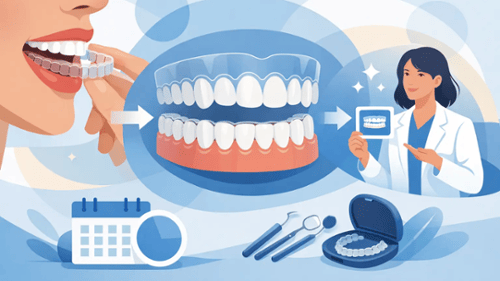
Invisalign uses a planned series of clear, removable aligners to move teeth gradually. Each aligner applies controlled pressure to selected teeth, guiding them towards their intended positions over time.
At BMB Dental Clinic in Mona Vale, we assess adults and older teenagers from the surrounding northern suburbs for clear aligner treatment. Invisalign is not simply a cosmetic product; it requires diagnosis, careful planning, consistent wear and regular professional review.
How does Invisalign move teeth?
Treatment begins with a consultation and examination. Your dentist assesses tooth position, bite, gums, supporting bone and any existing fillings, crowns or dental concerns.
If Invisalign is suitable, digital scans, photographs and X-rays may be used to plan a sequence of small tooth movements.
Each aligner is shaped slightly differently. As you progress through the series, the trays apply gentle pressure that encourages the teeth to move towards the planned result.
How many hours a day should Invisalign be worn?
Aligners generally need to be worn for around 20 to 22 hours each day, unless your dentist gives different instructions.
They should be removed for meals and for drinks other than water. After eating, clean your teeth before replacing the trays whenever possible.
Consistent wear is essential. Leaving aligners out for long periods can slow tooth movement, affect how the next tray fits and lengthen treatment.
What happens at the Invisalign consultation?
Your dentist will ask what you would like to change and examine your teeth, gums and bite.
The assessment may identify problems that need treatment first, such as decay, gum inflammation, unstable fillings or dental pain. Teeth should not be moved until the mouth is healthy enough for orthodontic care.
You will also have the opportunity to discuss timing, expected commitment, fees, alternatives and likely limitations.
How is the treatment plan created?
Digital scans create an accurate three-dimensional model of the teeth. The dentist uses this information to plan the movement sequence and review the proposed bite.
The digital simulation can help explain the intended direction of treatment, but it is still a prediction. Teeth move biologically, so professional monitoring and adjustments remain important.
Your plan may include attachments, elastics or small amounts of space creation between selected teeth.
What are Invisalign attachments?
Attachments are small tooth-coloured shapes bonded temporarily to certain teeth.
They give the aligners extra grip and help create movements such as rotation, tipping or controlled root movement.
Attachments are generally subtle but may be visible at close range. They are removed when treatment is complete.
What is enamel reduction between teeth?
In some cases, a very small amount of enamel is carefully reshaped between selected teeth. This is known as interproximal reduction.
It can create space for alignment and help manage tooth proportions. Your dentist should explain why it is recommended and how much is required before proceeding.
How often are Invisalign aligners changed?
Many patients change to a new set every one to two weeks, but the schedule varies according to the treatment plan and how the teeth are responding.
Do not change aligners earlier than instructed. Moving ahead too quickly may prevent the teeth from tracking correctly.
At review appointments, your dentist checks tray fit, tooth movement, gum health and bite development.
How long does Invisalign treatment take?
Treatment time depends on the amount and type of movement required.
Minor spacing or crowding may take several months. More involved alignment or bite correction can take a year or longer.
Consistent wear, attendance and biological response all influence timing. A responsible estimate can only be provided after assessment and planning.
What can Invisalign treat?
Invisalign may be suitable for:
- Mild to moderate crowding
- Gaps between teeth
- Teeth that have moved after previous braces
- Certain overbite or underbite concerns
- Some crossbites
- Selected rotated teeth
- Cosmetic alignment before restorative treatment
Suitability depends on the full bite, not only the appearance of the front teeth.
When might braces be more suitable?
Fixed braces may provide more predictable control for severe rotations, complex bite correction, significant vertical movements or patients who are unlikely to wear aligners consistently.
Some cases may benefit from a combined approach or specialist orthodontic assessment.
You can compare clear aligners and braces before deciding.
Does Invisalign hurt?
Patients commonly feel pressure or tightness when beginning a new aligner. This is usually most noticeable for a day or two and then settles.
Sharp pain, persistent rubbing or an aligner that does not fit properly should be assessed by the clinic.
Do not cut, heat or reshape an aligner yourself because this may affect treatment accuracy.
How should Invisalign aligners be cleaned?
Rinse aligners with cool water and clean them gently using the method recommended by your dentist.
Avoid hot water because it can distort the plastic. Keep the trays in their case whenever they are not in your mouth.
Brush and clean between your teeth before replacing them. Food and plaque trapped beneath an aligner can increase the risk of decay, odour and staining.
Can you eat and drink with Invisalign?
Remove aligners before eating. They should also be removed for drinks other than plain water.
Eating with trays in place can damage or stain them. Sugary or acidic drinks trapped beneath the aligners can also increase the risk of enamel damage.
Frequent snacking can make consistent wear more difficult, so meal routines may need some adjustment.
What are Invisalign refinements?
Refinements are additional aligners used after the initial sequence to fine-tune tooth position or bite.
They are relatively common and do not automatically mean treatment has failed. Biological response and day-to-day wear can differ from the digital prediction.
Your quote should explain whether likely refinements are included.
Why are retainers needed after Invisalign?
Teeth naturally tend to shift after orthodontic treatment. Orthodontic retainers hold them in their new positions while the surrounding tissues adapt.
Retainers are commonly worn more frequently at first and then at night over the long term.
Without consistent retainer wear, some relapse is likely even after a well-completed treatment.
How much does Invisalign cost?
The fee depends on case complexity, treatment length, number of aligners, review appointments and refinements.
Additional dental treatment may be required before aligners begin. Retainers and replacement aligners should also be discussed when reviewing the quote.
You can view dental payment options when planning treatment.
Is Invisalign right for you?
Invisalign may suit patients who want a discreet, removable option and can commit to wearing aligners for most of the day.
It may not be ideal for every bite or for patients who frequently lose appliances or remove them for long periods.
A detailed assessment is the only reliable way to determine whether Invisalign, another aligner system or braces provides the best result.
Book an Invisalign consultation in Mona Vale
Clear aligner treatment should improve more than the appearance of the front teeth. It should also support a comfortable bite, healthy gums and a result that can be maintained.
Book an Invisalign consultation with BMB Dental Clinic in Mona Vale. Our experienced team welcomes patients from Mona Vale and surrounding northern suburbs and will explain your suitability, treatment stages, fees and alternatives clearly.